Spotting Fake Rolex Air-King 126900 & 116900 Watches
Learn to authenticate Rolex Air-King 126900 & 116900 models with expert tips on movement, bracelet, and dial details.
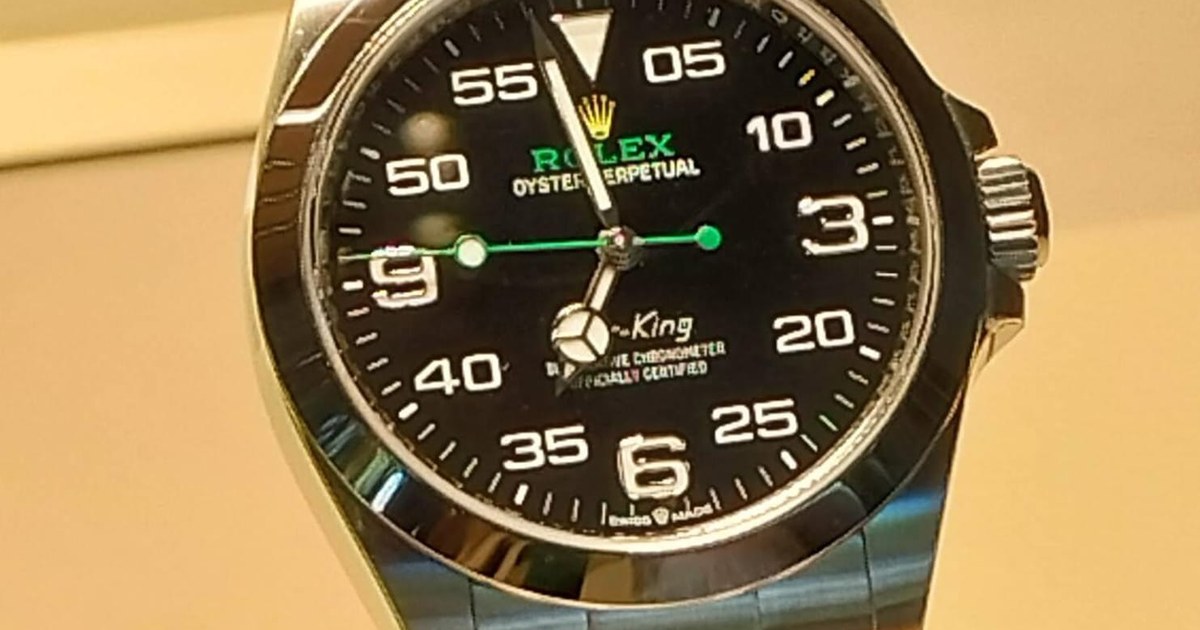
The Rolex Air-King, with its aviation-inspired heritage, is a sought-after timepiece that has seen significant updates in recent years. The 116900, introduced in 2016, was succeeded by the 126900 in 2022. These models are often targeted by counterfeiters, especially with the rise of super-clones that replicate the weight and general appearance with alarming accuracy. However, by focusing on specific micro-details, such as the movement, bracelet engravings, and dial markings, you can discern genuine pieces from high-quality fakes. Given the high cost of these watches, ensuring authenticity is crucial to avoid financial loss.
Movement Caliber Verification
The Rolex Air-King 116900 is powered by the Calibre 3131, while the 126900 uses the updated Calibre 3230. Both movements are COSC-certified, but the 3230 features Rolex's Chronergy escapement, offering improved efficiency and power reserve. To verify the movement, consult the manufacturer's datasheet for the specific year of production. Authentic models will have the movement number engraved on the movement itself, visible only to trained watchmakers during service.
Bracelet and Clasp Codes
The Rolex Air-King 116900 and 126900 typically feature the Oyster bracelet. Look for the code stamped inside the clasp; it must match the model's published code from manufacturer service literature. While the exact code can vary, it should always be consistent with the model and production year. Pay attention to the quality of the engraving — it should be crisp and precise, not etched or laser-printed.
Dial Printing and Markings
The Air-King's dial is distinctive, with a mix of large 3, 6, and 9 numerals and a minute scale for navigational time readings. Check for the depth and precision of the printing. Genuine Rolex dials have a slight depth to the text and markers, achieved through a high-quality printing process. Misalignments or uneven printing are strong indicators of a counterfeit.
Rehaut Engravings
The rehaut, or the inner flange of the watch, should have 'ROLEX ROLEX ROLEX' engraved around it, along with the serial number at 6 o'clock. The engraving should be sharp and perfectly aligned with the minute markers on the dial. Any misalignment or shallow engraving can indicate a fake.
Caseback Design
Both the 116900 and 126900 models feature a solid caseback. Rolex does not use transparent or display casebacks for these references. If you encounter an Air-King with a sapphire or display caseback, it is undoubtedly a counterfeit.
Crown Logo and Position
The Rolex crown logo on the winding crown should be deeply embossed and perfectly aligned when fully screwed down. It should not feel loose or misaligned. The crown's position and quality are often overlooked in counterfeits, making it a reliable check.
Red Flags at a Glance
- Transparent caseback → fake
- Misaligned rehaut engraving
- Shallow or uneven dial printing
- Incorrect movement caliber
- Loose or misaligned crown logo
FAQ
What movement does the Rolex Air-King 116900 use?
The Rolex Air-King 116900 uses the Calibre 3131 movement.
Does the Air-King 126900 have a display caseback?
No, the Air-King 126900 features a solid caseback, not a display one.
How can I verify the bracelet code on my Air-King?
Check the clasp for a code that matches the model's published code in Rolex service literature.
Final Word
Authenticating a Rolex Air-King, whether it's the 116900 or the 126900, requires attention to detail and knowledge of the specific characteristics of each model. While super-clones can mimic many aspects, they often miss the mark on micro-details like engraving precision and movement specifics. If in doubt, seek a second opinion from an authorised dealer or an independent watchmaker to ensure the authenticity of your timepiece.
Want a second opinion in seconds? Watch Authenticator scans a photo and runs the same checks — dial, crown, rehaut, caseback, movement — flagging anything off. Try it →